Office Cleaning Checklist for Desks Kitchens and Restrooms to Boost Health and Productivity

A messy workplace does more than look bad. It slows people down, spreads germs on shared surfaces, attracts pests, and makes simple tasks harder than they need to be.
A clean workspace helps people focus because there is less visual clutter and fewer distractions. It also supports health by reducing dust, food residue, fingerprints, and germs on high-touch areas. The goal is not to make every surface shine every minute of the day. The goal is to build a repeatable cleaning routine that keeps the workplace safe, pleasant, and ready to use.
This office cleaning checklist covers the areas that usually need the most attention: individual work areas, kitchens or break rooms, restrooms, floors, trash, and shared touchpoints. Use it as a starting point, then adjust the frequency based on foot traffic, season, building size, and the type of work being done.

Why a clean workplace supports better work
Clean spaces make daily work easier. People can find what they need, shared areas stay usable, and fewer distractions compete for attention. Cleanliness also sends a clear signal that the workplace is cared for.
The health side matters too. High-touch surfaces such as handles, faucets, light switches, and appliance buttons collect germs throughout the day. Dust can bother allergies or breathing comfort. Food crumbs and spills can attract insects or rodents if ignored.
A good cleaning routine does not rely on one big cleanup. It works because small tasks happen at the right frequency.
The most effective approach is simple:
Clean visible dirt first.
Sanitize or disinfect high-touch surfaces after cleaning.
Restock supplies before they run out.
Assign clear ownership for shared tasks.
Keep a written checklist so nothing depends on memory.
For best results, match each task to a realistic schedule. Some jobs belong on the daily list. Others can happen weekly, monthly, or as needed.
The complete workplace cleaning schedule
Use this table as the main checklist. It gives a clear view of what to clean and how often to do it.
Area | Task | Suggested frequency |
Work areas | Remove trash, cups, food wrappers, and clutter | Daily |
Work areas | Wipe keyboards, phones, mice, chair arms, and other high-touch items | Daily or several times weekly |
Work areas | Dust surfaces, shelves, monitor stands, and nearby ledges | Weekly |
Kitchen or break room | Wipe counters, tables, appliance handles, and sink fixtures | Daily |
Kitchen or break room | Empty trash and recycling | Daily, or more often if full |
Kitchen or break room | Clean microwave interior and exterior | Daily for shared use, weekly at minimum |
Kitchen or break room | Check refrigerator for old food | Weekly |
Restrooms | Clean and disinfect toilets, sinks, faucets, flush handles, and door handles | Daily |
Restrooms | Restock soap, paper towels, toilet paper, and liners | Daily |
Restrooms | Mop floors and clean mirrors | Daily or several times weekly |
Floors | Vacuum carpets and mats | Daily in high-traffic areas, weekly elsewhere |
Floors | Sweep and mop hard floors | Daily in kitchens and restrooms, weekly elsewhere |
Shared surfaces | Wipe door handles, switches, railings, buttons, and shared equipment | Daily |
Deep cleaning | Clean vents, baseboards, upholstery, windows, and hard-to-reach areas | Monthly or quarterly |
This table works well as a master plan, but the details matter. Each area has its own risks and habits.
Desk and work area cleaning checklist
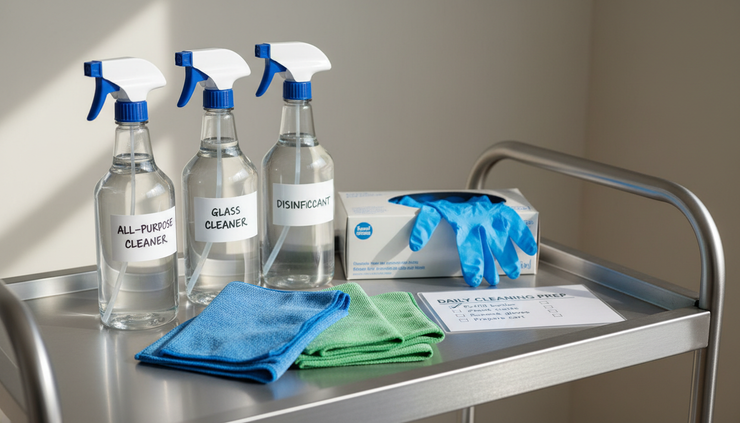
Even when the cleaning crew handles floors and trash, individual work areas still need attention. Personal habits make a big difference here. Food wrappers, coffee rings, dust, and shared devices can build up quickly.
Daily tasks for work areas
These tasks take only a few minutes when done consistently:
Clear food, drinks, sticky notes that are no longer useful, packaging, and loose trash.
Put files, notebooks, and personal items in their proper place.
Wipe high-touch items such as phones, mice, keyboards, chair arms, drawer pulls, and headset controls.
Empty small bins if food waste is inside.
Clean spills right away, especially coffee, soda, and food sauces.
Use a microfiber cloth for dust and a suitable cleaning product for surfaces. For electronics, never spray directly onto the device. Spray the cloth lightly, then wipe. This reduces the chance of liquid getting into keys, ports, or seams.
Weekly tasks for work areas
Weekly cleaning should handle what daily cleaning misses:
Dust shelves, monitor stands, lamps, windowsills, and nearby ledges.
Vacuum under seating areas and around cables.
Wipe chair bases and wheels if they collect dust.
Clean smudges from screens with a product made for screens.
Sort paper piles and remove outdated materials.
A practical tip is to set a recurring 10-minute reset at the end of the week. That short habit prevents clutter from turning into a bigger task.
Monthly tasks for work areas
Once a month, take care of deeper cleaning:
Remove items from storage drawers and wipe inside.
Check cables and surge protectors for dust buildup.
Clean behind monitors or equipment.
Review supplies and remove duplicates or broken items.
Wash reusable desk mats or replace disposable liners if used.
The key is consistency. A clean work area should not feel sterile. It should feel ready.
Kitchen and break room cleaning checklist
Shared kitchens get dirty fast because food, water, heat, and many hands all meet in one space. If the kitchen smells bad or looks neglected, people notice right away. A clear checklist helps prevent arguments about who left the mess.
Daily kitchen tasks
The daily list should focus on food safety, odors, and high-touch surfaces:
Wipe counters, tables, chairs, and sink areas.
Clean appliance handles, microwave buttons, refrigerator handles, coffee machine controls, and cabinet pulls.
Wash or load dishes by the end of the day.
Empty trash and recycling before they overflow.
Sweep the floor and spot mop spills.
Wipe the inside of the microwave if food splatters.
Rinse the sink and remove food scraps.
Spills should be cleaned as soon as they happen. Sticky floors and counters attract pests and create slip risks.
Weekly kitchen tasks
Weekly tasks keep the kitchen from becoming unpleasant:
Clean the refrigerator handle, shelves, bins, and door seals.
Remove expired food and unclaimed containers.
Clean the coffee maker, kettle, toaster area, and water dispenser.
Wipe cabinet doors and drawer fronts.
Mop the floor thoroughly.
Wash reusable dish towels or replace disposable cleaning cloths.
Clean trash cans inside and outside.
A simple refrigerator rule helps: choose one day each week for old food removal. Post a small notice so everyone knows when unlabeled or expired items may be discarded.

Monthly kitchen tasks
Monthly cleaning should target buildup:
Deep clean inside the refrigerator and freezer.
Clean behind and under small appliances.
Descale coffee machines and kettles as recommended by the manufacturer.
Wipe walls or backsplashes near food prep areas.
Wash trash and recycling bins thoroughly.
Check for signs of pests near baseboards, cabinets, and trash areas.
The best tip for kitchen cleaning is to keep supplies close. Store paper towels, dish soap, sanitizer, gloves, and trash liners where people can access them quickly. If supplies are hard to find, spills sit longer.
Restroom cleaning checklist
Restrooms need the most reliable cleaning schedule. They affect comfort, hygiene, odor control, and the overall impression of the workplace. They also include many high-touch surfaces.
Daily restroom tasks
A daily restroom checklist should include:
Clean and disinfect toilets, toilet seats, flush handles, urinals, and partitions.
Clean sinks, faucets, counters, soap dispensers, and paper towel dispensers.
Wipe mirrors and remove water spots.
Empty trash bins and sanitary disposal containers.
Restock toilet paper, soap, paper towels, and hand sanitizer if used.
Sweep and mop floors.
Clean door handles, light switches, locks, and push plates.
Check for leaks, clogs, odors, or damaged fixtures.
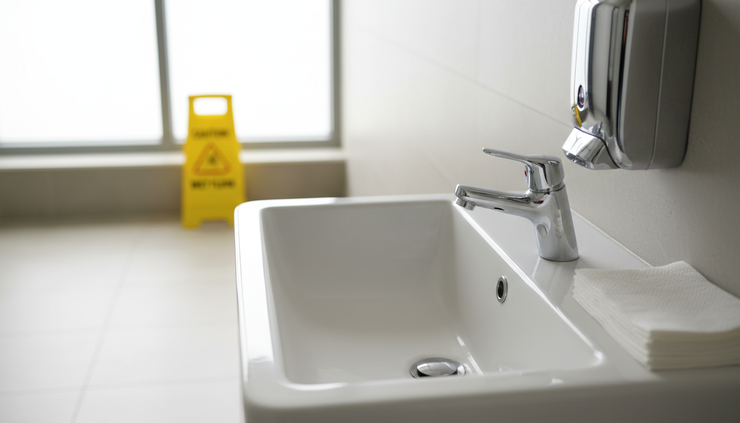
Use separate cleaning cloths and tools for restrooms. Do not use restroom cloths in kitchens or work areas. Color-coded cloths can make this simple. For example, one color for restrooms, another for kitchens, and another for general surfaces.
Weekly restroom tasks
Weekly tasks should go beyond the visible surfaces:
Scrub grout lines and floor edges.
Clean the outside of dispensers and partitions.
Dust vents, ledges, and light fixtures.
Check drains for odor.
Wash walls near sinks and hand dryers.
Inspect caulking and seals for moisture problems.
Odor control depends on cleaning the source, not just adding fragrance. A fresh scent can help, but it should never cover up dirty drains, overflowing trash, or damp mop heads.
Monthly restroom tasks
Monthly restroom tasks help prevent long-term buildup:
Deep clean tile, grout, and baseboards.
Clean exhaust vents.
Inspect plumbing areas for slow leaks.
Check supply storage and order products before they run low.
Review traffic patterns and adjust the cleaning schedule if needed.
If a restroom serves many people, daily cleaning may not be enough. High-traffic restrooms may need midday checks for supplies, trash, and visible mess.
Shared surfaces, floors, and trash checklist
Some cleaning tasks do not belong to one room. These are the surfaces and systems that connect the whole workplace.
High-touch shared surfaces
Clean these daily, or more often during cold and flu season:
Door handles and push plates
Light switches
Elevator buttons
Stair railings
Shared printers and copiers
Vending machine buttons
Time clocks or access keypads
Water fountains
Reception counters
Shared tools or equipment
Clean first, then disinfect if needed. Dirt and oils can reduce how well disinfectants work. Always follow the contact time on the product label. Many disinfectants need to stay wet on the surface for a short period to work properly.
Floors and entry areas
Floors carry in dirt, salt, water, pollen, and debris. Entry areas often need the most attention because they set the tone for the rest of the space.
Daily or frequent tasks include:
Vacuum entry mats.
Sweep hard floors.
Spot mop spills.
Remove tracked-in dirt near entrances.
Check mats for curling edges or slip risks.
Weekly tasks include:
Vacuum carpets thoroughly.
Mop hard floors with the correct cleaner.
Clean floor edges and corners.
Shake out or wash mats if needed.
Monthly or seasonal tasks include carpet extraction, floor polishing, and mat replacement. Winter, rainy seasons, and heavy foot traffic may require more frequent floor care.
Trash and recycling
Trash routines should be simple and predictable:
Empty bins before they are full.
Replace liners as needed.
Separate recycling correctly.
Clean spills inside bins.
Wash bins regularly, especially in kitchens and restrooms.
Store full trash bags in a proper location until pickup.
Food waste should never sit overnight if it can be avoided. It creates odors and attracts pests.
Tips for making the checklist work every day
A checklist only helps if people can follow it. Keep the process clear, visible, and realistic.
Assign ownership.
Decide who handles each task. Some jobs may belong to a cleaning provider. Others may be shared by employees, building staff, or managers.
Use the right products.
Match cleaners to the material. Glass, stainless steel, stone, wood, electronics, and tile may require different products. Read labels and follow safety directions.
Avoid cross-contamination.
Use separate cloths, mop heads, and gloves for restrooms, kitchens, and general areas. Store clean and dirty tools separately.
Clean from high to low.
Dust and debris fall downward. Start with higher surfaces, then clean counters, then floors.
Work from clean to dirty.
In restrooms, for example, clean mirrors and dispensers before toilets. This keeps tools cleaner for longer.
Keep supplies stocked.
Running out of soap, liners, or paper towels makes the space feel neglected. Check supplies daily in high-use areas.
Document problems.
Cleaning often reveals maintenance issues. Slow drains, leaks, loose handles, damaged tiles, pest signs, and broken dispensers should be reported quickly.
Review the schedule.
A quiet office may not need the same routine as a busy call center, clinic, warehouse office, or coworking space. Adjust the schedule when traffic changes.
A simple weekly planning template
Use this simple format to turn the checklist into a routine.
Day | Focus area | Main tasks |
Monday | Work areas and shared surfaces | Dust, wipe high-touch points, remove clutter |
Tuesday | Kitchen or break room | Clean appliances, check supplies, mop floor |
Wednesday | Restrooms | Deepen daily cleaning, check grout and drains |
Thursday | Floors and entry areas | Vacuum, mop, clean mats, check corners |
Friday | Reset and restock | Remove old food, empty bins, restock supplies |
Daily cleaning should still happen each day. The weekly focus simply gives extra attention to one area at a time.
The takeaway
A clean workplace does not happen by accident. It comes from small, repeated habits supported by a clear schedule. Desks and work areas need daily resets. Kitchens need strict attention to food residue and trash. Restrooms need reliable cleaning, disinfection, and restocking. Shared surfaces, floors, and entry areas tie everything together.
Use this checklist as a living document. Print it, assign tasks, review it often, and update it when the space changes. When cleaning becomes part of the routine, the workplace feels healthier, calmer, and easier to use every day!
If you need a hand cleaning up your office and you are in the Baton Rouge greater metropolitan area, then call Twilight Tidy today and get a quote same day!


Comments